
By John Jordan
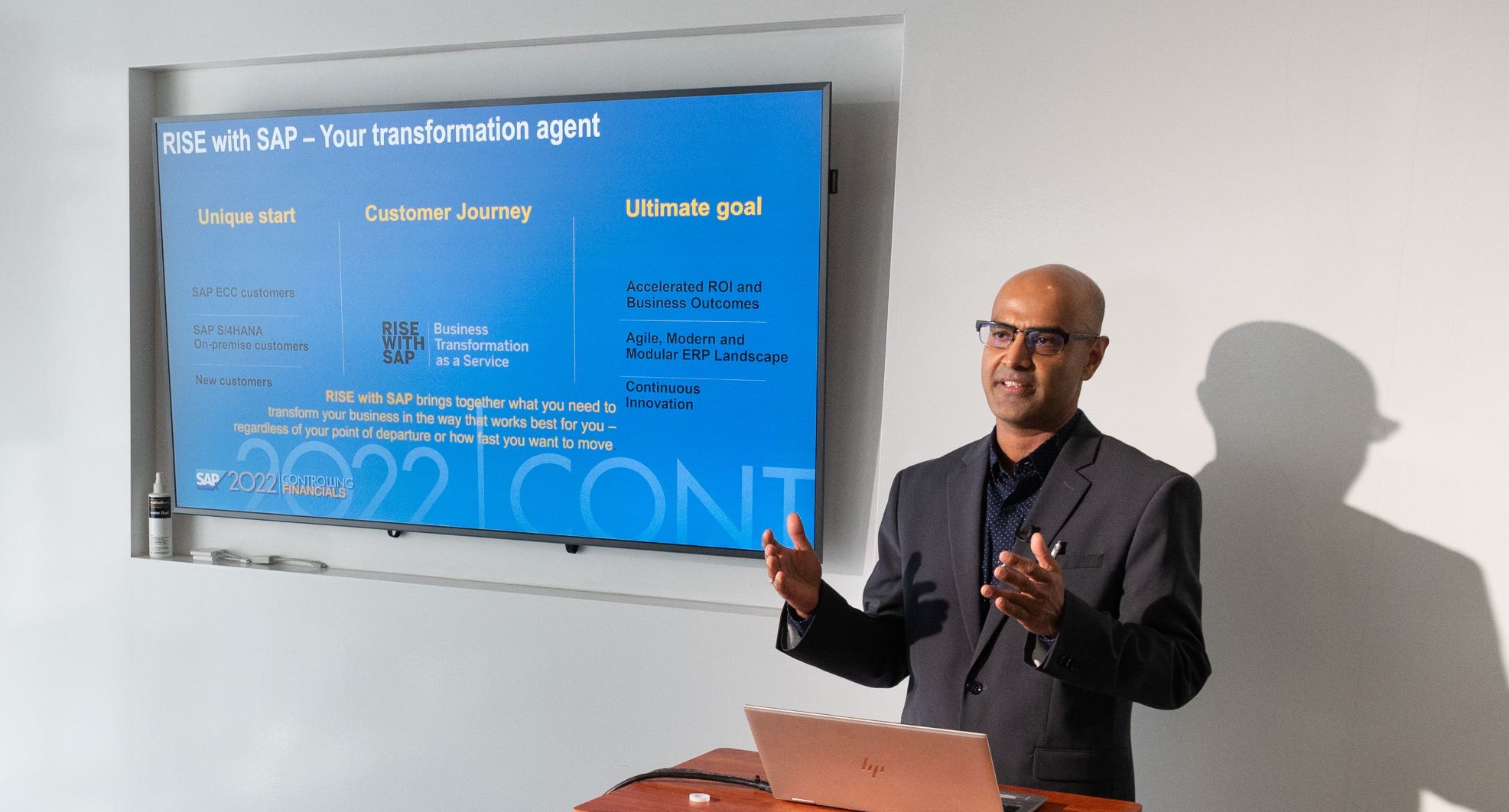
RISE with SAP helps organizations modernize their existing SAP ERP landscape and move toward cloud ERP. Its potential benefits include a managed cloud foundation, structured transformation guidance, and a cleaner approach to adopting new capabilities.
For Finance and Controlling teams, the practical question is how that transformation will support reliable accounting, costing, reporting, and closing processes.
What Is RISE with SAP?
SAP positions RISE with SAP as a guided transformation journey for existing SAP ERP customers moving toward SAP Cloud ERP Private. Its methodology combines a standardized framework, expert guidance, and tools to plan and execute the transformation.
Use the current offering and your signed agreement to confirm which software, services, and usage rights are included. Older descriptions of the RISE bundle may reflect a different scope.
RISE with SAP vs. SAP GROW: Cloud ERP Editions
Table 1 distinguishes the two SAP offerings from the software editions Finance and Controlling teams evaluate.
| Term | What It Describes | What to Check |
|---|---|---|
| RISE with SAP | A guided transformation journey for organizations with an existing SAP ERP landscape. | Migration approach, responsibilities, managed services, and commercial scope. |
| SAP GROW (GROW with SAP) | A cloud ERP adoption offering for growing companies, aimed primarily at customers new to SAP. It includes SAP S/4HANA Cloud Public Edition and preconfigured business processes. | Fit with standard processes and which implementation services are included. |
| SAP Cloud ERP Private | The marketing name for SAP S/4HANA Cloud Private Edition. | Required configuration, extensions, integrations, and support for existing Finance and Controlling processes. |
| SAP Cloud ERP | In this product comparison, the marketing name for SAP S/4HANA Cloud Public Edition. | Fit with standardized processes, supported scope, and the public-cloud release schedule. |
For a concrete Finance and Controlling example, Private Edition supports classic Internal Order Accounting. Public Edition uses enterprise projects for tasks such as tracking overhead and investment costs. See the SAP deployment glossary for a comparison that also includes SAP ERP (ECC) and SAP S/4HANA on-premise.
Key Benefits of RISE with SAP
A Managed Cloud ERP Foundation
SAP Cloud ERP Private provides an SAP-managed cloud environment for core business processes. This can help organizations focus their transformation planning on business requirements alongside technical operations.
A Structured Transformation Methodology
The RISE with SAP Methodology provides road maps, milestones, quality gates, and guidance. These help project teams organize decisions and track progress throughout the transformation.
Clean Core and Ongoing Innovation
Clean core principles aim to reduce unnecessary complexity so that organizations can maintain and extend their ERP landscape more effectively. A disciplined approach to customizations and integrations supports future change.
Access to New Capabilities
SAP’s current RISE positioning includes AI-assisted transformation tools and Joule capabilities alongside the move to cloud ERP. Evaluate which tools support your migration tasks, which business capabilities are available in your target release, and which entitlements apply to your subscription.
Scope and Implementation Considerations
- Subscription scope: Confirm the software, services, environments, and usage rights included in your agreement. Do not assume that every BTP, analytics, or AI capability is included.
- Implementation responsibilities: A cloud subscription does not remove the need for process design, configuration, integration, migration, testing, and training. Establish who delivers each activity.
- Contract coverage: Simplified contracting does not mean that every partner service or project cost is covered by one agreement.
- Deployment differences: Confirm the supported business processes, release schedule, and maintenance responsibilities for the edition you select.
- Business case: Compare subscription costs, implementation effort, operating responsibilities, and expected benefits for your own landscape.
Finance and Controlling Priorities
Use the transformation project to validate how financial data and business transactions will flow through your future system. Include these workstreams in the project plan:
- Accounting and reconciliation: Validate ledger, currency, account, and master-data design; reconcile opening balances and migrated transactions.
- Product Costing: Test representative materials, BOMs, routings, activity rates, and overhead settings. Explain differences between current and future cost estimates.
- Material Ledger and Actual Costing: Confirm valuation and currency requirements, and define whether Actual Costing is part of the target design. Include a representative period-end close in testing.
- Margin Analysis and reporting: Agree the profitability dimensions and reports needed by Finance and business users, then reconcile results to accounting.
- Integration and closing: Test procurement, production, sales, interfaces, and authorizations through complete business scenarios and a trial close.
For related concepts, explore our guides to SAP Product Cost Controlling and SAP Material Ledger.
Measure the Benefits Against a Baseline
Before the project starts, record the time spent on closing, costing runs, reconciliations, and manual reporting. Use those measures, together with operating costs and user adoption, to assess whether the transformation delivers the expected business value.
SAP Documentation
- RISE with SAP: journey and methodology
- SAP Cloud ERP Private: benefits and capabilities
- SAP GROW: scope and comparison with RISE
Plan Your SAP Finance and Controlling Transformation
Need help translating your cloud ERP plans into practical Finance and Controlling requirements? ERPCorp can help with Product Costing, Material Ledger, reporting, and period-end process design.
Glossary
Clean Core
Principles for limiting unnecessary ERP complexity and supporting maintainable customizations and extensions.
RISE with SAP
SAP’s guided approach to modernizing an existing ERP landscape through cloud ERP transformation.
SAP Business Technology Platform (BTP)
A platform for integration, application development, automation, and other services. Confirm the relevant services and entitlements for your project.
SAP Cloud ERP
The public-cloud ERP product name used in this article for SAP S/4HANA Cloud Public Edition, with standardized processes and SAP-managed updates.
SAP Cloud ERP Private
The product name for SAP S/4HANA Cloud Private Edition, providing a managed cloud foundation for organizations that need detailed configuration and support for established processes.
SAP GROW (GROW with SAP)
SAP’s cloud ERP adoption offering for growing companies, aimed primarily at customers new to SAP. It includes SAP S/4HANA Cloud Public Edition and preconfigured processes.